

How AI, automation, and retail capital are transforming direct lending—and creating the next generation of private credit markets.
Private credit has become one of the defining stories of the private markets revolution.
Once largely the domain of specialist lenders, private equity firms, insurance companies, and institutional investors, direct lending has evolved into a major source of financing for businesses - and an increasingly important asset class for investors searching for income and diversification beyond traditional public markets.
But the next phase may look very different from the last.
Artificial intelligence is changing underwriting.
Automation is transforming loan origination and servicing.
Digital platforms are creating new distribution channels.
And individual investors are gaining access through private credit funds, BDCs, interval funds, evergreen structures, and wealth platforms.
Welcome to Private Credit 2.0.
From Alternative Lending to Mainstream Finance
Private credit expanded rapidly following the Global Financial Crisis as banks reduced exposure to certain types of corporate lending and alternative asset managers stepped into the gap.
What began as a relatively specialized corner of private markets has developed into a significant component of corporate finance.
Private lenders now finance everything from middle-market companies and real estate to infrastructure, asset-backed lending, technology companies, and acquisition financing.
For borrowers, private credit can offer speed, flexibility, and customized financing structures.
For investors, it can provide income and exposure to opportunities outside traditional public fixed-income markets.
The result is a market increasingly sitting alongside banks and public bond markets as a major source of capital.
AI Is Changing Credit Underwriting
The next transformation is technological.
Traditional credit underwriting relies heavily on financial statements, historical performance, management discussions, and analyst judgment.
AI potentially adds another layer.
Modern systems can analyze enormous amounts of structured and unstructured information - from company financials and transaction data to industry trends, market conditions, and portfolio performance.
Used appropriately, AI can help lenders:
- Identify credit risks earlier
- Analyze borrower data faster
- Improve portfolio monitoring
- Detect anomalies
- Compare opportunities across portfolios
- Automate elements of due diligence
- Support more dynamic risk assessment
AI won’t eliminate human judgment in private credit.
But it can significantly increase the amount of information available to decision-makers—and the speed at which that information can be processed.
Automation Is Rebuilding the Lending Infrastructure
The transformation extends far beyond underwriting.
Much of private credit still relies on fragmented workflows across origination, documentation, compliance, servicing, reporting, and investor management.
Automation is beginning to connect these processes.
Imagine a lending ecosystem where borrowers can submit information digitally, underwriting data flows directly into credit models, compliance checks occur automatically, documents are executed electronically, and investors receive real-time portfolio reporting.
The entire credit lifecycle becomes more efficient.
Origination → Underwriting → Compliance → Funding → Servicing → Reporting → Liquidity
As private credit scales, this infrastructure becomes increasingly important.
Retail Capital Enters Private Credit
Perhaps the biggest long-term shift is happening on the investor side.
Historically, institutional investors dominated private credit.
Today, wealth managers and individual investors are becoming an increasingly important distribution channel.
Private credit can offer characteristics many investors are seeking:
- Income generation
- Floating-rate exposure in some strategies
- Portfolio diversification
- Access to private-company lending
- Lower correlation to some traditional assets
New investment structures are also making access easier.
BDCs, interval funds, evergreen funds, feeder vehicles, and digitally distributed private funds are creating pathways for individual investors to participate without directly underwriting individual loans.
Private credit is moving from an institutional allocation toward a broader wealth-management product.
The Rise of Evergreen Private Credit
Traditional private funds often require investors to commit capital for many years.
Evergreen and semi-liquid structures are changing that experience.
Rather than operating around a fixed fund lifecycle, evergreen private credit vehicles can continuously raise capital, deploy it, reinvest repayments, and maintain diversified portfolios.
Interval and other registered structures can also provide defined mechanisms for periodic liquidity, subject to fund terms and available capacity.
This doesn’t make inherently illiquid loans liquid.
But it can create a structure better suited to wealth-management portfolios.
And that distinction could unlock a much larger investor base.
Private Credit Meets the $65 Trillion Shift
Private credit is part of a much bigger transformation.
Already large at approximately $25 trillion, private markets are projected to reach $65 trillion by 2032.
At the same time, investors are increasingly looking beyond public markets for their next sources of income, diversification, and long-term returns.
Yet much of the infrastructure supporting capital formation, distribution, compliance, investor management, and secondary liquidity remains fragmented.
As private credit expands into the wealth channel, solving that fragmentation becomes increasingly important.
Millions of individual investors cannot be served efficiently using infrastructure originally designed for a relatively small universe of institutions.
Distribution Becomes as Important as Origination
Historically, competitive advantage in private credit centered heavily on sourcing deals and underwriting them effectively.
Those capabilities remain critical.
But another competitive advantage is emerging:
Distribution.
Asset managers need increasingly efficient ways to connect investment products with broker-dealers, RIAs, family offices, wealth platforms, and qualified individual investors.
This creates an opportunity for digital co-syndication networks and private-market marketplaces that connect product manufacturers with multiple distribution channels.
The next generation of private credit won’t simply be about finding borrowers.
It will also be about building the infrastructure that connects borrowers, lenders, advisors, and investors.
Capital Engine®: Building the Connectivity Layer
Capital Engine® is building the infrastructure layer for private markets, connecting issuers, broker-dealers, RIAs, family offices, and institutional investors through a single digital ecosystem.
Our infrastructure supports:
- Digital capital formation
- Investor onboarding
- KYC/AML and compliance workflows
- Reg D, Reg A+, and Reg S offerings
- White-label investment marketplaces
- Co-syndication and distribution
- Investor management and reporting
- Secondary-market infrastructure
Backed by our FINRA-approved acquisition of Mallory Capital Group ($10B+ raised) and Glynn Capital Advisors (RIA) joining our firm, we’re scaling a network designed to connect private-market investment products with an increasingly broad investor universe.
As private credit moves further into wealth management, this connectivity becomes increasingly valuable.
Private Credit 2.0
The first generation of modern private credit was largely about filling the lending gap left by traditional banks.
The next generation will be about something much bigger:
- AI-powered underwriting
- Automated infrastructure
- Digital distribution
- Evergreen capital
- Broader individual investor participation
Together, these forces could transform private credit from an institutionally dominated asset class into a much more connected component of the global investment ecosystem.
The opportunity isn’t simply to digitize private lending.
It’s to rebuild the infrastructure around it.
And as private markets move toward $65 trillion, Private Credit 2.0 could become one of the most important chapters in that transformation.
EXPLORE PRIVATE MARKET INVESTMENTS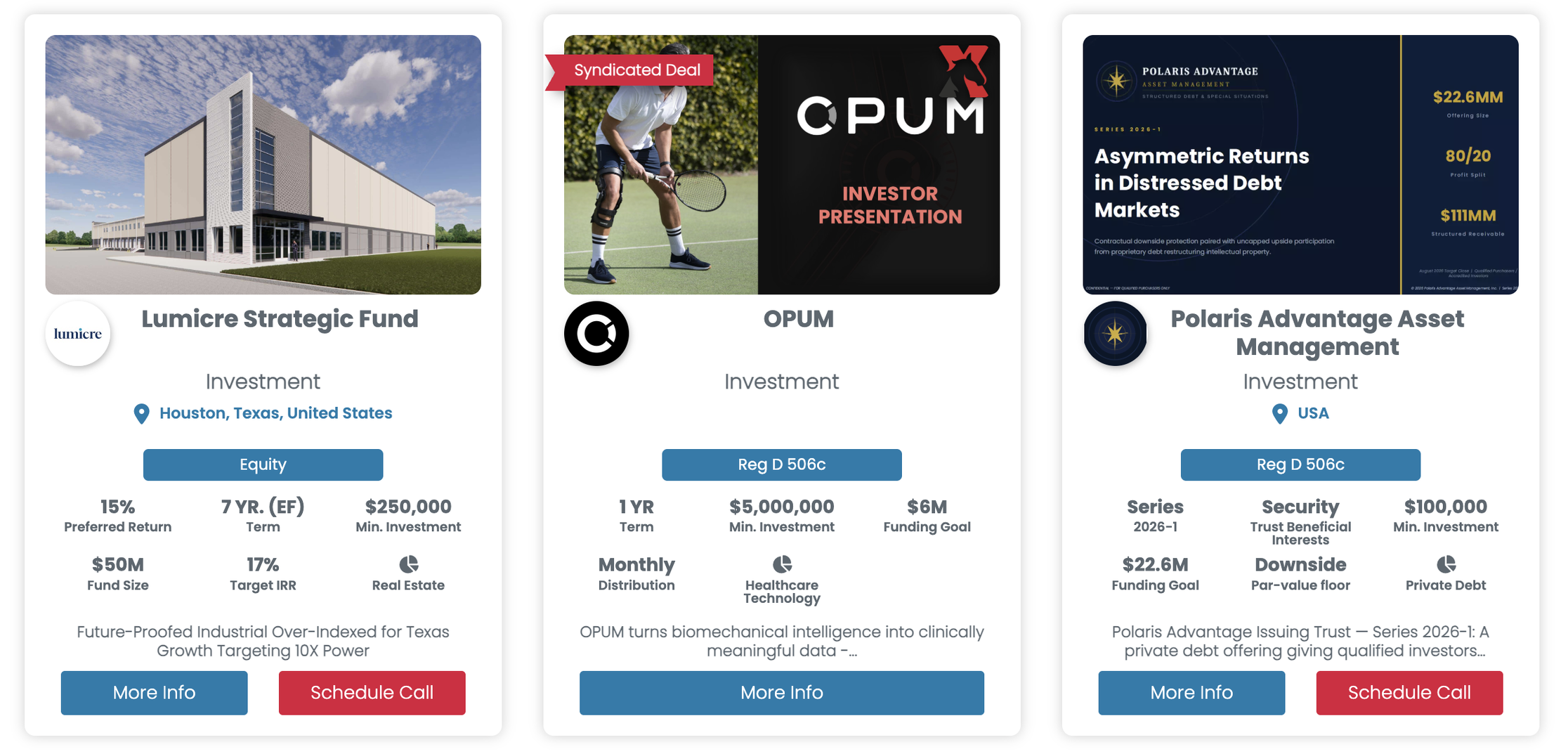
Private Markets This Month
Join StreetZero.com the AI Engine for Private Markets Intelligence. StreetZero tracks venture and private-placement deals — with AI analysis, source documents, and the proprietary StreetZero Signal REGISTER NOW
Private Equity Firms Cling to Assets for Longer, Upending Business Model Buyout firms are starting to look like Hotel California — assets check in, but they almost never leave READ MORE
SEC weighs broader retail access to private markets proposal could significantly widen retail investors’ access to private markets while allowing investment advisers to charge performance-based fees to a broader range of clients READ MORE
Rich Friedman on the Rise of Private Markets and AI Investing Chairman of Goldman Sachs Asset Management, says there are still plenty of investment opportunities in private equity, even as private markets have grown far larger than he would have imagined a few decades ago READ MORE
Private Take: Private capital’s coming of age Manager selection is becoming increasingly critical as private capital enters the next phase of its life READ MORE
In the Engine Room Podcast

Up Next: The Rise of Digital Family Offices Technology is changing how affluent investors manage private market allocations. If you missed any of the earlier issues, you can catch up at: Capitalengine.io/newsletter
Interested in learning more about Capital Engine® - Request a Demo
Subscribe on LinkedIn to the Private Capital Pulse newsletter to stay ahead of the curve in the evolving world of private investments.
T&C* Apply. Read our terms & privacy policy.