

Why blockchain’s biggest opportunity isn’t crypto - it’s private securities.
For most of the last decade, tokenization was sold as a crypto story.
Coins, exchanges, and speculation dominated the headlines.
Most serious investors stayed on the sidelines. J.P. Morgan’s 2026 Global Family Office Report found that 89% of family offices hold no crypto or digital assets at all.
That story is now being rewritten.
But the next phase may look very different from the last.
America’s post-trade backbone is preparing to tokenize securities.
Banks are moving tokenized collateral through real financing workflows.
Asset managers are routing tokenized funds through broker-dealers.
And private-market funds are moving on-chain, with liquidity tools close behind.
Welcome to Tokenization Becomes Infrastructure.
From Crypto Experiment to Market Plumbing
SEC Chairman Paul Atkins has put the principle plainly: a stock is still a stock “whether it is a paper certificate, an entry in a DTCC account, or represented by a token on a public blockchain.”
In his words: “Securities, however represented, remain securities.”
Tokenization isn’t a new asset class. It’s a new way to record, move, and service the assets we already have.
The market is still small: RWA.xyz tracked about $39 billion of distributed tokenized real-world assets as of October 19, held by more than 5.3 million holders, up about 15% in 30 days.
But scale isn’t the point yet.
Plumbing is.
The Post-Trade Backbone Goes On-Chain
On October 16, DTCC published the launch scope for its Tokenization Service, slated to go live this month.
At launch: 25 securities, drawn from select Russell 1000 stocks, ETFs, and U.S. Treasuries, with roughly $30 trillion of DTC-held assets available to be tokenized over time.
Tokens keep the same CUSIP, rights, and investor protections as book-entry securities. Official books and records stay with DTC.
On-chain settlement, collateral, netting, and digital cash sit on the roadmap for 2027 and beyond.
This isn’t a parallel market.
It’s the existing market, upgrading its rails.
Collateral Moves at the Speed of Software
On October 13, BNY and Citadel Securities completed what BNY called the first use of tokenized assets on a major triparty repo platform. A two-year Treasury note was represented as a token on BNY’s private ledger, settled within minutes rather than T+1, then pledged as collateral in an overnight repo.
The same day, on Goldman Sachs’ earnings call, CEO David Solomon compared tokenization to the shift to electronic trading, saying it is “creating more products, greater activity, potentially new clients, broader distribution channels.”
He also said activity so far is “small and at the margin.”
Both statements are true. That’s what early infrastructure looks like.
Tokenized Funds Enter the Brokerage Account
Distribution is where tokenization meets the retail revolution.
On October 13, Federated Hermes, with $911.6 billion under management, announced a partnership with Prometheum to issue tokenized funds through SEC-registered, FINRA-member broker-dealers. The first product is expected in Q1 2027, with access for introducing broker-dealers through Prometheum’s clearing platform.
Prometheum co-CEO Aaron Kaplan named the gap: tokenized funds “have primarily been issued on platforms that sit outside the mainstream brokerage system where most Americans invest.”
Morgan Stanley CFO Sharon Yeshaya made the advisor case: “The tokenized world means it is faster and easier to move assets around, and you will need advice.”
For broker-dealers and RIAs, that’s an opportunity, not a threat.
Private Securities Are the Real Prize
Treasuries and stocks are proving the rails. Private securities may be where those rails matter most.
Public markets already settle in a day. Private markets still run on subscription documents, manual transfer records, and quarterly statements.
On October 15, Victory Park Capital and Tradable launched VALTS, a tokenized feeder giving qualified purchasers access to a registered interval fund focused on asset-backed credit. Holders can transfer tokens to other pre-approved investors. Tradable says it has tokenized $3 billion in private credit.
Citi’s Tokenization 2030 report is measured. It projects $5.5 trillion of tokenized assets by 2030 in its base case, led by public securities, with roughly $100 billion each in tokenized private credit and private equity.
Modest in size. Significant in direction.
As private markets move from approximately $25 trillion toward a projected $65 trillion by 2032, the cost of servicing every new investor manually will only grow.
Liquidity Gets Its Own Layer
Putting a fund on-chain doesn’t make it liquid.
VALTS’ liquidity depends on the underlying fund’s quarterly repurchase offers, set at 5% to 25% of shares. Semi-liquid is still semi-liquid.
But a liquidity layer is forming. On October 15, Fission raised a $10 million Series A led by Pantera Capital to help eligible holders of supported tokenized funds access capital without waiting for redemption windows.
“Putting funds on-chain is only the beginning,” said founder and CEO Jonathan Shaffer.
When records, compliance, and cash share rails, the lifecycle can connect:
Issuance → Eligibility → Onboarding → Subscription → Transfer → Distributions → Collateral → Liquidity
Every step that becomes programmable is one less reconciliation.
Rights Still Rule
Infrastructure only works if it earns trust.
Under the SEC’s September 17 innovation exemption, tokenized stock venues must give issuers 30 days to object to third-party tokens. On October 15, OKXICE disclosed objections from nine companies, including Broadcom, Verizon, and UnitedHealth, The Block reported.
The lesson for private markets: issuer control and holder rights are features, not friction.
Regulation is catching up. The SEC’s proposed transfer agent modernization would allow master securityholder files to be kept on blockchain. Comments are due November 3.
None of this is final.
But the direction is clear.
Capital Engine®: Building the Tokenization Layer
Capital Engine® is building the infrastructure layer for private markets, connecting issuers, broker-dealers, RIAs, family offices, and institutional investors through a single digital ecosystem.
Our infrastructure supports:
- Digital capital formation
- Investor onboarding
- KYC / AML and compliance workflows
- Reg D, Reg A+, and Reg S offerings
- White-label investment marketplaces
- Co-syndication and distribution
- Investor management and reporting
- Secondary-market infrastructure
Backed by our FINRA-approved acquisition of Mallory Capital Group ($10B+ raised), Glynn Capital Advisors (RIA) joining our firm, and our strategic alliance with Regiment Securities, we’re building the regulated connections that tokenized private securities will need to reach eligible investors.
As tokenization moves into the regulated financial system, we’re building the layer that connects private securities with the investors, intermediaries, and rails that will carry them.
Tokenization Becomes Infrastructure
The first generation of tokenization was built around crypto exchanges and speculation.
The next may be built around:
- Tokenized securities inside core post-trade systems
- Real-time collateral and settlement
- Broker-dealer and RIA distribution
- Tokenized private-market funds
- Compliance embedded in the asset
- New layers of secondary liquidity
Tokenization won’t make illiquid assets liquid or replace investor protection. It can make private securities easier to issue, distribute, service, and transfer.
The opportunity isn’t simply to put assets on a blockchain. It’s to rebuild the infrastructure private securities run on.
And as private markets move toward $65 trillion, tokenization becoming infrastructure could be one of the defining shifts of that transformation.
EXPLORE PRIVATE MARKET INVESTMENTS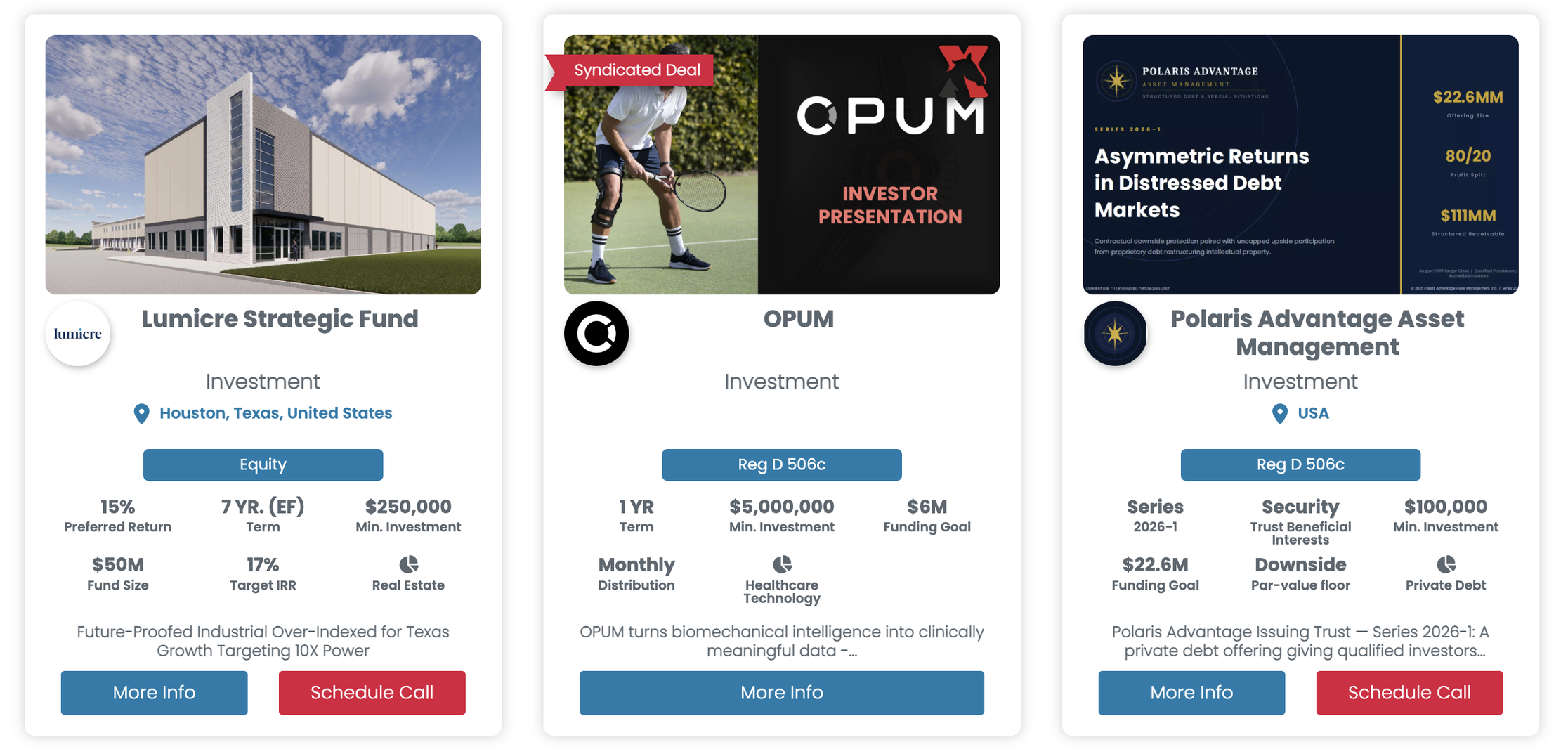
Private Markets This Month
Launch of StreetZero.com the AI Engine for Private Markets Intelligence. StreetZero tracks venture and private-placement deals — with AI analysis, source documents, and the proprietary StreetZero Signal REGISTER NOW
BNY Completes Tokenized U.S. Treasury Triparty Repo Workflow with Citadel Securities A tokenized two-year Treasury note settled within minutes and was then used as collateral in an overnight triparty repo, a first for a major triparty platform. READ MORE
Prometheum and Federated Hermes Announce Strategic Partnership to Issue Tokenized Securities Funds A $911.6 billion asset manager plans to distribute tokenized funds through SEC-registered, FINRA-member broker-dealers, starting in Q1 2027. READ MORE
Victory Park Capital and Tradable Launch VALTS, Tokenizing Access to Asset-Backed Credit A tokenized feeder fund gives qualified purchasers on-chain access to a registered asset-backed credit interval fund. READ MORE
Fission Raises $10M Series A Led by Pantera Capital to Bring Liquidity to Digital Private Markets The startup is building liquidity infrastructure so eligible holders of tokenized private-market and semi-liquid funds can access capital between redemption windows. READ MORE
In the Engine Room Podcast

Up Next: The New Distribution Economy How technology is replacing traditional fundraising models. If you missed any of the earlier issues, you can catch up at: Capitalengine.io/newsletter
Interested in learning more about Capital Engine® - Request a Demo
Subscribe on LinkedIn to the Private Capital Pulse newsletter to stay ahead of the curve in the evolving world of private investments.
T&C* Apply. Read our terms & privacy policy.