

How regulation, registered investment vehicles, and technology are opening private markets to millions of new investors
For decades, one of the defining characteristics of private markets was exclusivity.
Private equity, venture capital, private credit, private real estate, and other alternative investments were largely the domain of institutions, family offices, and wealthy individuals who qualified under the SEC’s accredited investor rules.
That framework is beginning to evolve.
As private companies remain private longer and more economic value is created outside public markets, regulators and market participants are asking an increasingly important question:
Should access to investment opportunity depend primarily on an investor’s wealth?
The debate is gaining momentum.
The SEC’s Investor Advisory Committee has examined ways to broaden retail investor access to private-market assets, including through registered funds that combine professional management, diversification, regulatory oversight, and varying levels of liquidity.
This is potentially much bigger than a regulatory adjustment.
It could represent the next stage in the democratization of private capital.
The Accredited Investor Wall
The accredited investor framework has historically acted as one of the principal gateways to private offerings.
For individuals, eligibility generally requires meeting specified income or net-worth thresholds, although the SEC has expanded the definition to recognize certain professional qualifications and other categories.
The objective is investor protection.
But the framework has also created an unintended divide.
Investors meeting certain financial thresholds can access private companies and funds that other investors cannot - even when the latter may understand the risks involved.
That distinction matters more today because companies are remaining private longer.
A growing portion of corporate value creation can occur before an IPO, meaning investors restricted primarily to public markets may enter only after years of private-market growth have already occurred.
The SEC Is Examining Broader Access
As highlighted by Private Equity Wire, the regulatory conversation around retail participation in private markets has been evolving.
The SEC’s Investor Advisory Committee has specifically examined retail investor access to private-market assets.
One pathway it identified is particularly important: registered funds containing private assets.
Rather than simply allowing every retail investor to participate directly in every private offering, registered structures can potentially provide access alongside important investor protections.
These can include:
- Professional investment management
- Portfolio diversification
- Audited financial statements
- SEC oversight
- Enhanced disclosure
- Defined liquidity mechanisms
This could create a middle ground between traditional public-market investing and direct participation in private placements.
Private Markets Need New Sources of Capital
The timing isn’t accidental.
Private markets are already approximately $25 trillion and are projected to reach as much as $65 trillion by 2032.
At the same time, individual investors are searching beyond traditional public equities for diversification, income, and long-term growth.
- Private equity.
- Private credit.
- Infrastructure.
- Commercial real estate.
- Venture capital.
- Secondaries.
These are increasingly becoming part of the wealth-management conversation.
If regulatory frameworks continue evolving, the addressable investor population for these assets could expand dramatically.
Registered Funds Are Building the Bridge
We’re already seeing structures designed to bridge public and private investing.
Interval funds, tender-offer funds, closed-end funds, BDCs, and other registered vehicles can provide individual investors with professionally managed exposure to less-liquid and private assets.
Interval funds are particularly interesting.
Unlike traditional private funds that can lock investor capital for many years, interval funds periodically offer to repurchase a portion of outstanding shares.
They don’t provide the daily liquidity of an ETF or mutual fund.
But they demonstrate how financial structures are evolving to reconcile two very different requirements:
Long-duration private assets and individual investors’ need for liquidity.
That innovation could prove critical to bringing private markets into mainstream portfolios.
From Accredited Investors to Everyday Portfolios
The bigger opportunity isn’t simply allowing more people to invest in individual private companies.
It’s creating an ecosystem where private-market exposure can become a professionally managed component of a diversified portfolio.
Imagine private assets sitting alongside stocks, bonds, and ETFs within a modern wealth platform.
An investor could potentially allocate across:
Public Equities + Fixed Income + Private Equity + Private Credit + Real Estate + Infrastructure
through a single digital experience.
That’s when private markets truly begin moving from alternative investments to everyday investments.
Democratization Must Come With Investor Protection
Broader access cannot mean ignoring risk.
Private assets introduce challenges that public-market investors may be less familiar with:
- Illiquidity
- Valuation uncertainty
- Longer holding periods
- Higher fees
- Limited disclosure
- Manager selection risk
The SEC’s own discussions emphasize the importance of valuation transparency, liquidity disclosure, diversification, and investor protections as retail participation expands.
The objective shouldn’t simply be more access.
It should be better access.
Technology and regulation must evolve together.
Access Requires Infrastructure
This brings us to a larger challenge.
Private markets may be moving from approximately $25 trillion toward $65 trillion by 2032, yet much of the infrastructure supporting capital formation, distribution, compliance, investor management, and secondary liquidity remains fragmented.
Infrastructure originally designed for thousands of institutional investors may eventually need to support millions of individual investors.
That requires:
Digital onboarding. Automated compliance. Scalable distribution. Investor education. Portfolio reporting. Liquidity infrastructure.
The democratization of private markets is therefore as much a technology challenge as a regulatory one.
Capital Engine®: Building the Infrastructure Layer
Capital Engine® has built the infrastructure layer for private markets, connecting issuers, broker-dealers, RIAs, family offices, and institutional investors through a single digital ecosystem.
Our platform supports multiple pathways into private investing, including:
- Reg A+ offerings
- Reg D offerings
- Reg S offerings
- Digital investor onboarding
- KYC/AML and compliance workflows
- White-label investment marketplaces
- Co-syndication and distribution
- Investor management and reporting
- Secondary-market infrastructure
Reg A+ is particularly relevant to the democratization story because qualifying offerings can reach non-accredited investors, subject to applicable SEC requirements and investment limits.
Backed by our recent FINRA-approved acquisition of Mallory Capital Group ($10B+ raised) and Glynn Capital Advisors (RIA) joining our firm, we’re now scaling a network designed to connect private-market opportunities with a broader universe of investors.
The Next Frontier: Access
The first era of private markets was institutional.
The second brought greater participation from family offices and accredited investors.
The next could be defined by individual investors.
Regulatory change will be deliberate—and rightly so. Private investments involve real risks, and broader participation must be accompanied by appropriate disclosure, diversification, education, and investor protection.
But the direction of travel is becoming increasingly clear:
- Technology is lowering barriers
- Investment structures are evolving
- Wealth platforms are embracing alternatives
- Regulators are examining new pathways
- And investors increasingly want access
The $65 trillion private-markets shift may therefore be about much more than asset growth.
It could represent a fundamental expansion of who gets to participate in private-market wealth creation.
EXPLORE PRIVATE MARKET INVESTMENTS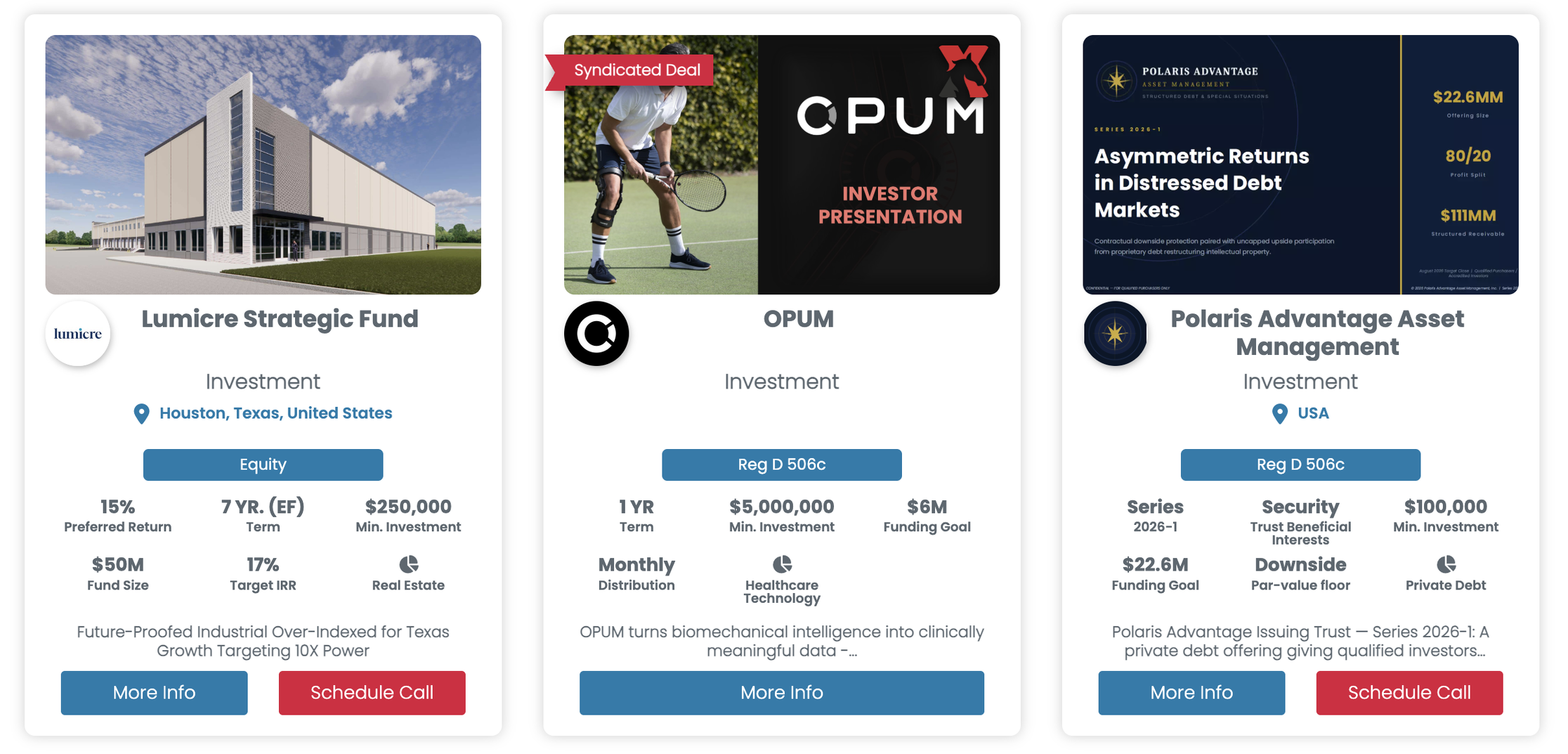
Private Markets This Month
Join StreetZero.com the AI Engine for Private Markets Intelligence. StreetZero tracks venture and private-placement deals — with AI analysis, source documents, and the proprietary StreetZero Signal REGISTER NOW
New York Life Investment Management Outlook Finds Private Markets Remain Resilient as Greater Dispersion Raises the Bar for Investors READ MORE
SEC weighs broader retail access to private markets proposal could significantly widen retail investors’ access to private markets while allowing investment advisers to charge performance-based fees to a broader range of clients READ MORE
I Don’t Look Like the Typical Private Equity Founder That’s been my greatest advantage. READ MORE
Private Markets, AI are Defining Priorities for Buy Side New Nasdaq Global Indexes survey finds private markets the top-ranked area of client demand across every region READ MORE
In the Engine Room Podcast

Up Next: Private Credit 2.0 How AI, automation and retail capital are transforming direct lending. If you missed any of the earlier issues, you can catch up at: Capitalengine.io/newsletter
Interested in learning more about Capital Engine® - Request a Demo
Subscribe on LinkedIn to the Private Capital Pulse newsletter to stay ahead of the curve in the evolving world of private investments.
T&C* Apply. Read our terms & privacy policy.