

How evergreen structures and interval funds are bringing an “ETF-like” experience to private investing - and opening alternatives to a much broader investor base.
One of the most important innovations in private markets isn’t a new asset class.
It’s a new way of accessing them.
For decades, investing in private equity, private credit, venture capital, real estate, and infrastructure generally meant committing capital to a traditional closed-end fund for seven to ten years - or longer.
Now that model is evolving.
Evergreen funds, interval funds, and other semi-liquid structures are creating new pathways into private markets, combining long-term private investments with more flexible subscription and liquidity mechanisms.
They aren’t ETFs in the traditional sense.
But they are moving private investing toward something investors increasingly expect:
Simpler access. Diversification. Digital distribution. Periodic liquidity.
And that could have profound implications for the democratization of private markets.
Investors Are Looking Beyond Public Markets
There’s another powerful force driving this transformation: investors are increasingly looking beyond traditional public markets for their next source of returns.
U.S. equities have delivered extraordinary wealth creation over the past 15 years. Investors understand that repeating that level of performance indefinitely may be difficult - particularly as public-market valuations, concentration, and macroeconomic uncertainty create new portfolio challenges.
At the same time, companies are staying private longer, meaning a greater share of their growth and value creation can occur before an IPO.
The result is a fundamental change in investor behavior.
Individual investors are increasingly looking toward private equity, private credit, real estate, infrastructure, venture capital, and secondaries for diversification, income, and potential long-term returns.
Some industry estimates suggest the expansion of individual investor participation could represent an opportunity approaching $14 trillion in net-new private-market capital over the coming years.
That’s not simply another distribution channel.
It could represent a structural expansion of the private markets investor base.
From Closed-End Funds to Evergreen Capital
Traditional private funds typically follow a defined lifecycle:
Raise capital → Invest → Harvest → Return capital → Raise again.
Evergreen structures change that dynamic.
Rather than operating around a fixed termination date, evergreen vehicles can continuously raise and deploy capital, reinvest proceeds, and maintain portfolios over longer periods.
For investors, this can create a simpler way to maintain an ongoing allocation to private markets.
For asset managers, it creates the potential for a more permanent capital base.
And for wealth managers, it can make private assets easier to incorporate into long-term portfolio construction.
Interval Funds Bridge Access and Liquidity
Interval funds take the evolution another step.
These registered closed-end funds can provide exposure to less-liquid assets while offering investors repurchase opportunities at predetermined intervals.
That distinction matters.
An interval fund isn’t an ETF, and investors shouldn’t expect to buy and sell shares throughout the trading day.
Liquidity is typically limited, periodic, and subject to the fund’s repurchase terms.
But compared with a traditional private fund that may lock capital away for many years, the structure creates a fundamentally different investor experience.
And that can make private markets more practical for individual investors and wealth-management portfolios.
The “ETF-ization” of Private Markets
ETFs transformed public investing by making diversified strategies easier to access, understand, and incorporate into portfolios.
Could something similar happen in private markets?
Not through identical products - but through similar principles.
Imagine investors allocating across:
Private Equity. Private Credit. Real Estate. Infrastructure. Venture Capital. Secondaries.
through professionally managed vehicles offering streamlined subscriptions, lower minimums, digital reporting, and structured liquidity.
Private assets begin to look less like an isolated alternative investment and more like another portfolio allocation.
That’s the bigger transformation underway.
Retail Capital Could Become the Next Growth Engine
This is where the potential scale becomes significant.
Private markets have historically been built around institutional capital from pension funds, endowments, sovereign wealth funds, insurance companies, and family offices.
The next wave could increasingly come from individual investors and the wealth-management channel.
Evergreen funds, interval funds, digital marketplaces, fractional investment structures, and technology-enabled distribution are lowering some of the historical barriers to participation.
For RIAs and wealth managers, these structures can also make alternatives easier to integrate alongside traditional stocks and bonds.
If trillions of dollars of individual wealth gradually migrate toward private assets, the industry’s distribution architecture will need to evolve with it.
The $65 Trillion Shift
The timing matters.
Already large at approximately $25 trillion, private markets are projected to reach $65 trillion by 2032.
Yet much of the infrastructure supporting capital formation, distribution, compliance, investor management, and secondary liquidity remains fragmented.
If private markets are going to absorb potentially trillions of dollars in new individual investor capital, the industry needs more than innovative investment products.
It needs infrastructure capable of distributing and managing them at scale.
Distribution Becomes the Next Battleground
As evergreen and semi-liquid products expand, competition increasingly shifts from simply manufacturing investment products to distributing them efficiently.
Broker-dealers, RIAs, family offices, fintechs, and digital wealth platforms become critical gateways.
Investors will expect to discover opportunities, complete onboarding, verify eligibility, execute documents, fund investments, monitor portfolios, and eventually access liquidity through connected digital experiences.
This creates a powerful convergence between asset management, wealth technology, regulated distribution, and private-market infrastructure.
Capital Engine®: Building the Infrastructure Layer
Capital Engine® has built the infrastructure layer for private markets, connecting issuers, broker-dealers, RIAs, family offices, and institutional investors through a single digital ecosystem.
Our technology supports capital formation, investor onboarding, compliance, white-label marketplaces, co-syndication, investor management, distribution, and secondary-market infrastructure.
Backed by our recent FINRA-approved acquisition of Mallory Capital Group ($10B+ raised) and Glynn Capital Advisors (RIA) joining our firm, we’re now scaling this network.
Our thesis is straightforward:
As private markets democratize, distribution and infrastructure become increasingly valuable.
From Alternative to Allocation
The biggest change in private markets may ultimately be psychological.
For decades, investors viewed alternatives as something separate from their core portfolios.
That distinction is beginning to blur.
Evergreen funds, interval funds, digital marketplaces, and new distribution models are making private investments easier to incorporate into modern portfolios.
They won’t turn illiquid private assets into liquid ETFs overnight.
But they could do something equally important:
Make private markets an everyday portfolio allocation.
With investors searching beyond public markets for their next generation of returns - and potentially trillions of dollars of individual capital moving toward alternatives - the implications are significant.
The $65 trillion private markets shift isn’t simply about private markets getting bigger.
It’s about who gets access to them.
EXPLORE PRIVATE MARKET INVESTMENTS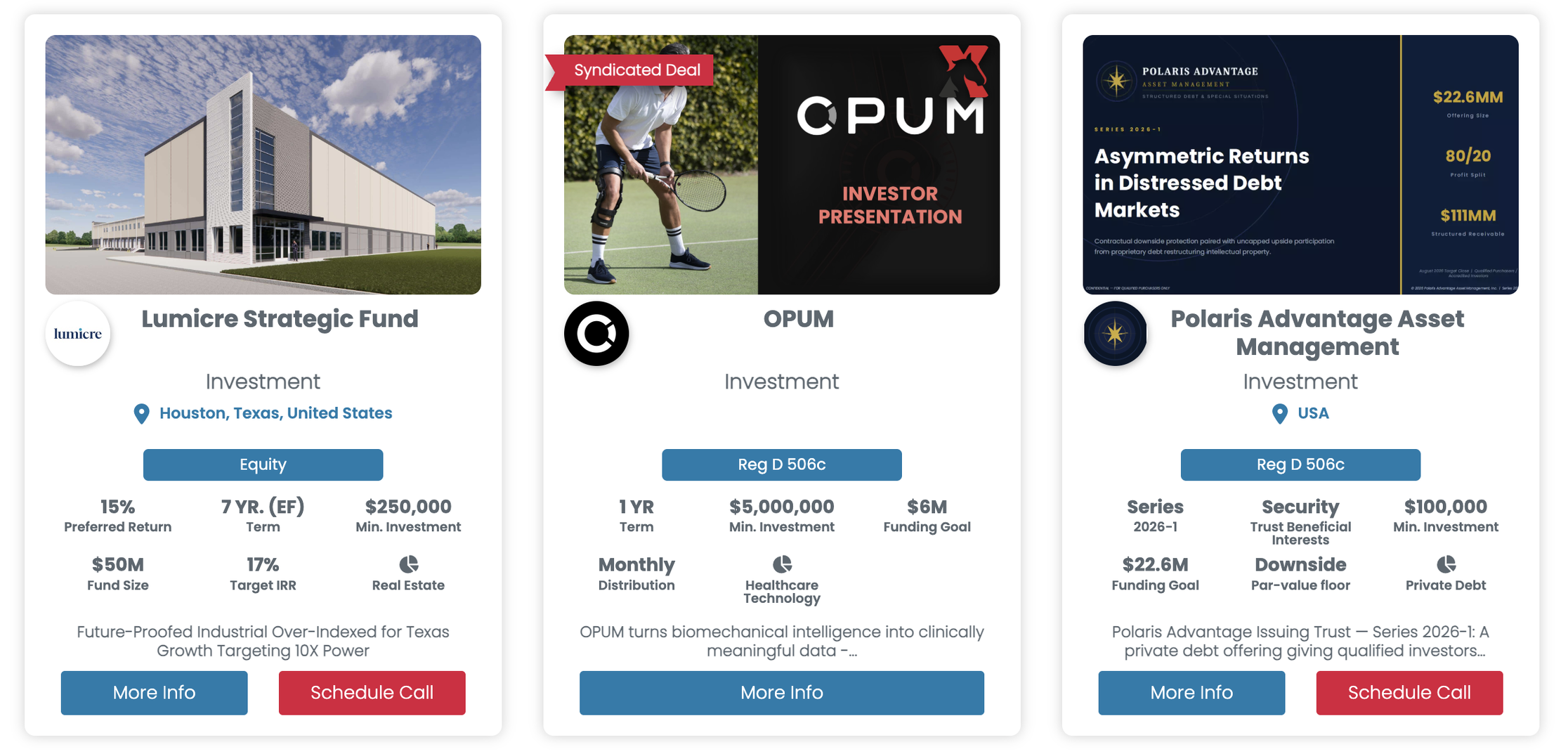
Private Markets This Month
Join StreetZero.com the AI Engine for Private Markets Intelligence. StreetZero tracks venture and private-placement deals — with AI analysis, source documents, and the proprietary StreetZero Signal REGISTER NOW
Moody’s sees ongoing surge in Africa’s private credit market Africa’s private credit market is set for further expansion as companies and infrastructure projects seek alternatives READ MORE
SEC Moves to Retailize Private Markets SEC has taken another step toward expanding retail investor access to private markets READ MORE
The Role of Private Market Assets in Workplace Retirement Plans U.S. retirement landscape has changed dramatically in recent decades. READ MORE
The Next Phase of Private Markets Growth After an eventful first half of the year, the outlook for private equity and private credit is driven by strong fundamentals and investors’ focus on quality assets. READ MORE
In the Engine Room Podcast

Up Next: Private Credit 2.0 How AI, automation and retail capital are transforming direct lending. If you missed any of the earlier issues, you can catch up at: Capitalengine.io/newsletter
Interested in learning more about Capital Engine® - Request a Demo
Subscribe on LinkedIn to the Private Capital Pulse newsletter to stay ahead of the curve in the evolving world of private investments.
T&C* Apply. Read our terms & privacy policy.